Physical Key Management Systems
Systematic physical containment, standardized tagging, and verified custodian release for multi-tenant commercial facilities.
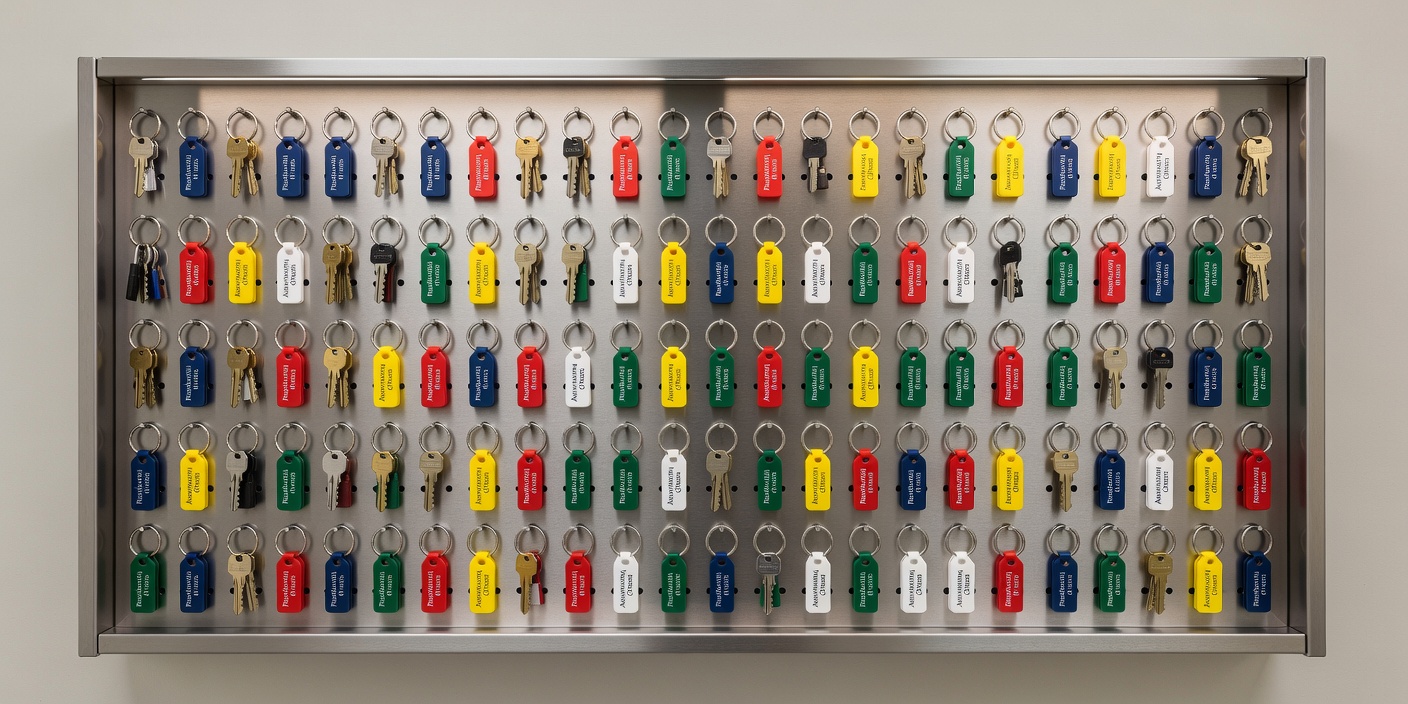
A physical key management system is an operational framework governing storage, identification, issuance, and return of mechanical keys. It balances immediate operational availability with controlled access accountability.
1. Physical Key Cabinets and Identification Protocols
Commercial property portfolios rely on physical keys for perimeter risers, mechanical plant rooms, electrical switch rooms, elevator motor rooms, and tenant sub-meters. When keys sit in unmonitored desk drawers or loose hooks, custody fails quickly. Controlled key management starts with heavy-gauge steel key cabinets mounted inside monitored facilities rooms.
Key tags must use tamper-evident split rings or steel cable loops. Standard wire rings allow unauthorized tag swapping without visual indicators. Each tag should carry a dedicated system identifier rather than a direct room label. For example, a tag marked "AHU-Roof-04" reveals the exact destination to anyone who finds it, whereas "KEY-409" links only to a secure ledger held behind the control desk.
2. Issue and Return Operational Procedures
Issuance must follow an immutable log. An authorized custodian unlocks the cabinet only when an approved work order or access permit is presented. The log records:
- Timestamp of release
- Key tag identifier and key ring bundle count
- Full name and organization of recipient
- Government-issued ID or vendor badge verification
- Specific areas authorized for entry
- Countersignature of both issuing custodian and recipient
Returns require reciprocal verification. The custodian must visually check the bundle to verify that individual sub-keys have not been detached or swapped with blank duplicates. The return timestamp is entered, and the recipient is released from active liability.
3. Centralized Storage versus Local Departmental Control
A common architectural question is whether to centralize all property keys in a single security desk cabinet or distribute smaller key boxes across operational departments (such as housekeeping, mechanical maintenance, and building security).
| Model | Primary Advantage | Operational Limitation |
|---|---|---|
| Centralized Security Cabinet | Single chain of custody; unified audit records | Transit overhead for shift workers across large facilities |
| Departmental Cabinets | Immediate accessibility for repetitive shifts | Decentralized logs; higher probability of unaccounted duplicates |
| Dual-Tier Master System | Operational efficiency with central master ledger | Demands strict dual-custodian reconciliation audits |
4. Duplicate-Key Policies and Mechanical Master Suites
Unregulated duplication destroys key control. All master keys and sub-masters should use patented cylinder profiles with restricted blanks. In a restricted profile setup, blanks are not sold on the open commercial market; they are released only to registered property representatives presenting verification cards.
The key management system must track total duplicates cut since cylinder installation. If three keys exist for a high-voltage switchroom, all three must be accounted for in the registry: two housed in the primary operational cabinet, and one sealed in emergency key containment.
5. Basic Storage vs. Controlled Management vs. Electronic Access
Understanding the distinction between access mechanisms is critical:
Basic Storage: A simple locked box. While it keeps keys out of open sight, it lacks systematic logging, custody forms, and inspection intervals. Keys are frequently borrowed without records.
Controlled Key Management: A disciplined human-and-hardware framework. Involves restricted access cabinets, unique tag identifiers, standardized issuance ledgers, dual-party signatures, and regular physical cross-checks.
Electronic Access Systems: Electronic credentials (RFID cards, mobile credentials, biometrics) managing electromagnetic door strikes. Electronic systems log events automatically but still require physical mechanical master keys for power outages, system failures, and mechanical plant spaces.
No physical cabinet or procedure guarantees total protection against determined bad actors. The objective of commercial key management is proportional control, verifiable custody records, and quick detection when a key is misplaced or overdue.